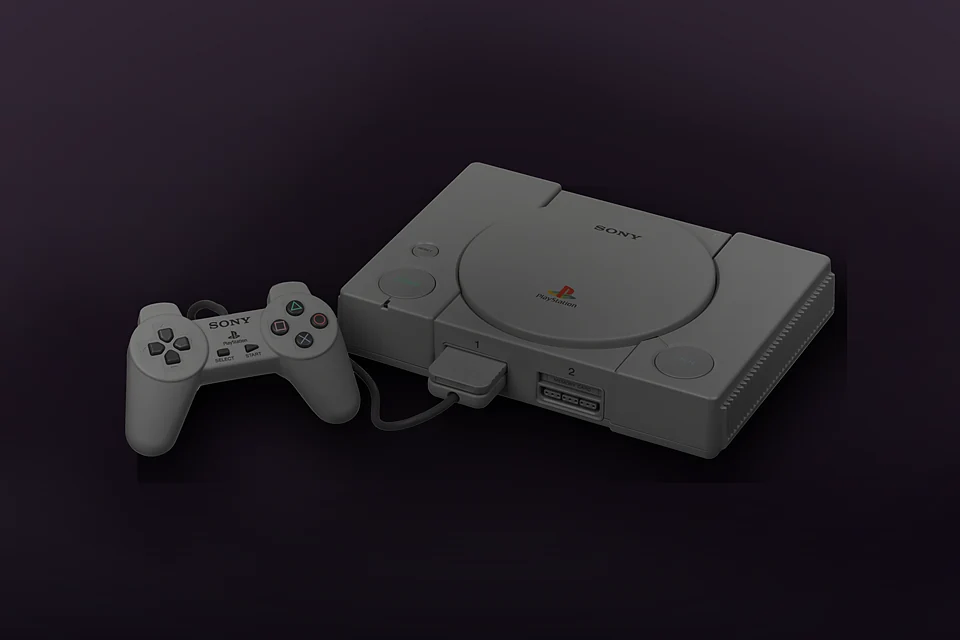
Before the future became a service that updated itself overnight, it sometimes arrived as a grey plastic machine beneath the television.
For a moment, there was nothing.
The television was on, but the screen remained black. Somewhere beneath it, inside a low grey machine, a compact disc had begun to turn. The plastic case lay open on the carpet. A controller cable crossed the floor. The room could have been a bedroom or the corner of a family living room after everyone else had gone upstairs.
Then came the sound.
It began low and wide, too large for the small speakers that produced it. The note seemed to open a dark space behind the glass. A brighter sequence followed. A coloured symbol appeared. For a few seconds, switching on a games console felt less like pressing a button and more like crossing a threshold.
There was no stream of notifications waiting on the other side. No storefront, social feed or automatic list of friends already online. There was only the machine, the disc and the quiet uncertainty of whether the game would load.
That uncertainty is part of why the memory lasted.
The future still arrived as an object
The original PlayStation belongs to a period when new technology often entered the home as a visible, physical event. It had weight. It occupied a shelf. It needed cables, a free input on the television and a place for its cases. Its possibilities were not hidden in an account. They sat in a reflective disc that could be lifted by the edges and pressed onto a spindle.
This made the future unusually easy to touch.
The console itself was restrained: pale grey plastic, a circular lid, three large buttons and a small flash of colour in the logo. It did not look like a spaceship. It looked like serious equipment. That was part of its power. In a decade filled with grey computers, stereos, printers and video recorders, the PlayStation borrowed the visual language of electronics rather than toys.
For a child, this made it seem as though it belonged to the adult world just ahead. It could live beneath the family television, but its strange advertising, compact discs and dark games suggested places that began after bedtime.
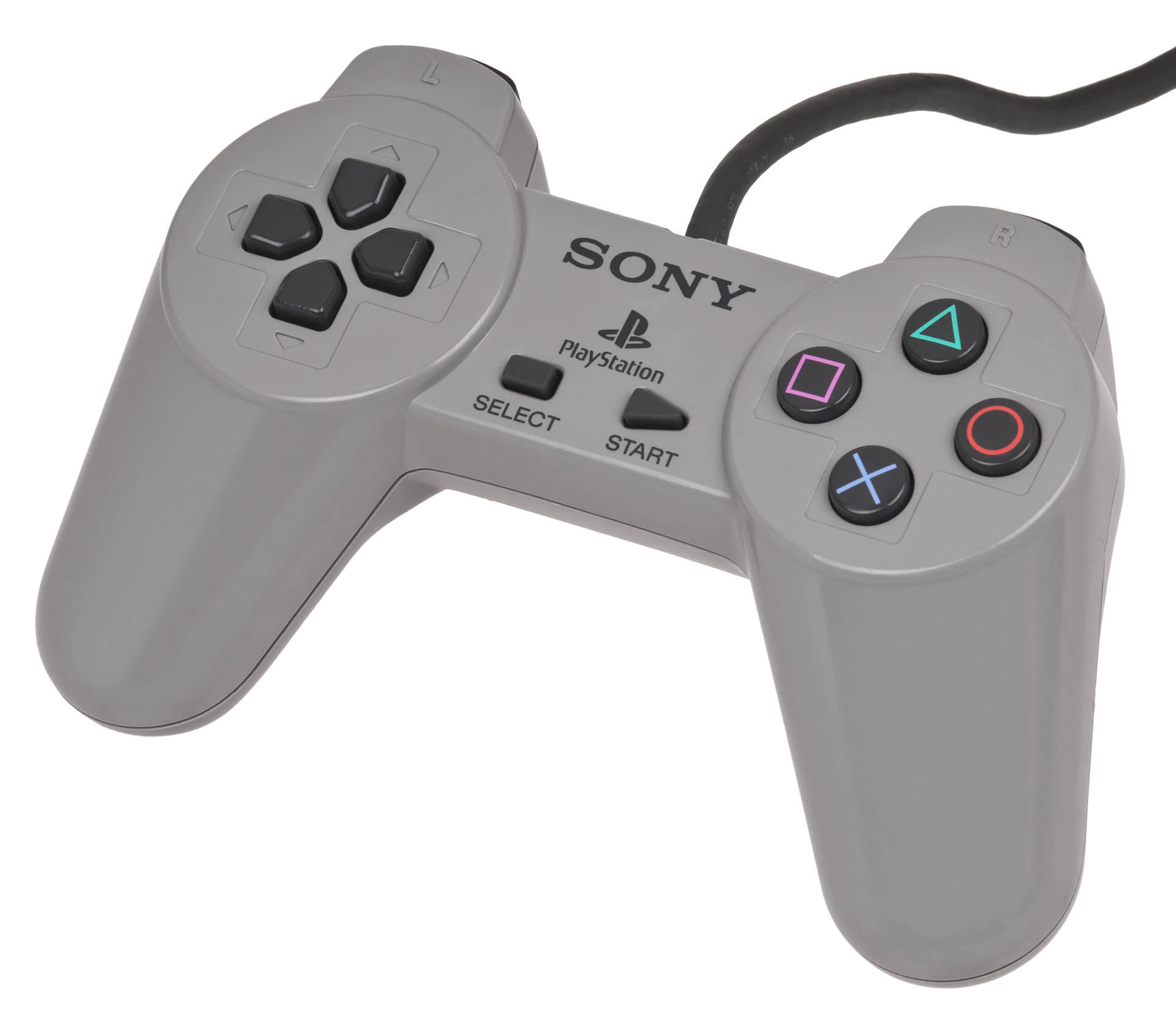
The controller made the new platform legible through a shape and symbol language that could be learned by touch.

Knowledge came in pieces
Before a game arrived, it often existed as fragments.
A magazine preview might contain six screenshots and a description of a level nobody you knew had played. Those images could be studied for weeks. Small details became promises. A distant tower suggested an entire city. A shadow at the edge of a corridor implied something the article had not explained. With no recorded playthrough available to settle the matter, imagination quietly rendered the missing world.
Rumours moved through schools, siblings and shop counters. A game might first be encountered as a box behind glass, a poster on a wall or a few silent seconds on a television mounted above a display. Information arrived unevenly, and that unevenness gave it room to grow.
Games themselves were often scarce. Many households did not buy one every week or every month. A title might arrive for a birthday or at Christmas and remain in the console for an entire season. Others came through friends, rental shops, market stalls or second-hand exchanges. What you played depended partly on what happened to pass through your small orbit.
This was not automatically better. Games were expensive. A poor choice could dominate the next few months. Instructions could be missing, discs could be scratched and access depended heavily on family circumstances. Nostalgia becomes dishonest when it turns limits into virtues for everyone.
But limits did change the emotional size of things. One game could occupy more space because it had less competition. A demo level could become familiar enough to feel like a real place. A magazine could be read until the corners softened. Anticipation had time to become part of the experience.
A newcomer without an inherited map
When Sony entered the console market, Nintendo and Sega already possessed recognisable worlds, mascots and loyalties. Their machines were part of playground arguments and bedroom identities. Choosing a console could feel like choosing a side.
Sony arrived from somewhere adjacent. The name was familiar from televisions, portable music players and compact disc equipment. It belonged to the electronics section rather than the toy aisle. That made the new console uncertain, but it also gave it freedom.
The PlayStation did not need to resemble the next chapter of an existing console tradition. It could carry the atmosphere of music culture, consumer electronics and the expanding multimedia world. Its cases looked closer to CDs than cartridges. Their covers could resemble album art or film posters. The discs scattered small rainbows across the room when turned toward the light.
Even the controller taught a new language. Triangle. Circle. Cross. Square. The symbols were simple enough for a child to learn and distinctive enough to stand for the entire platform. They did not borrow an alphabet from another machine. They made their own.
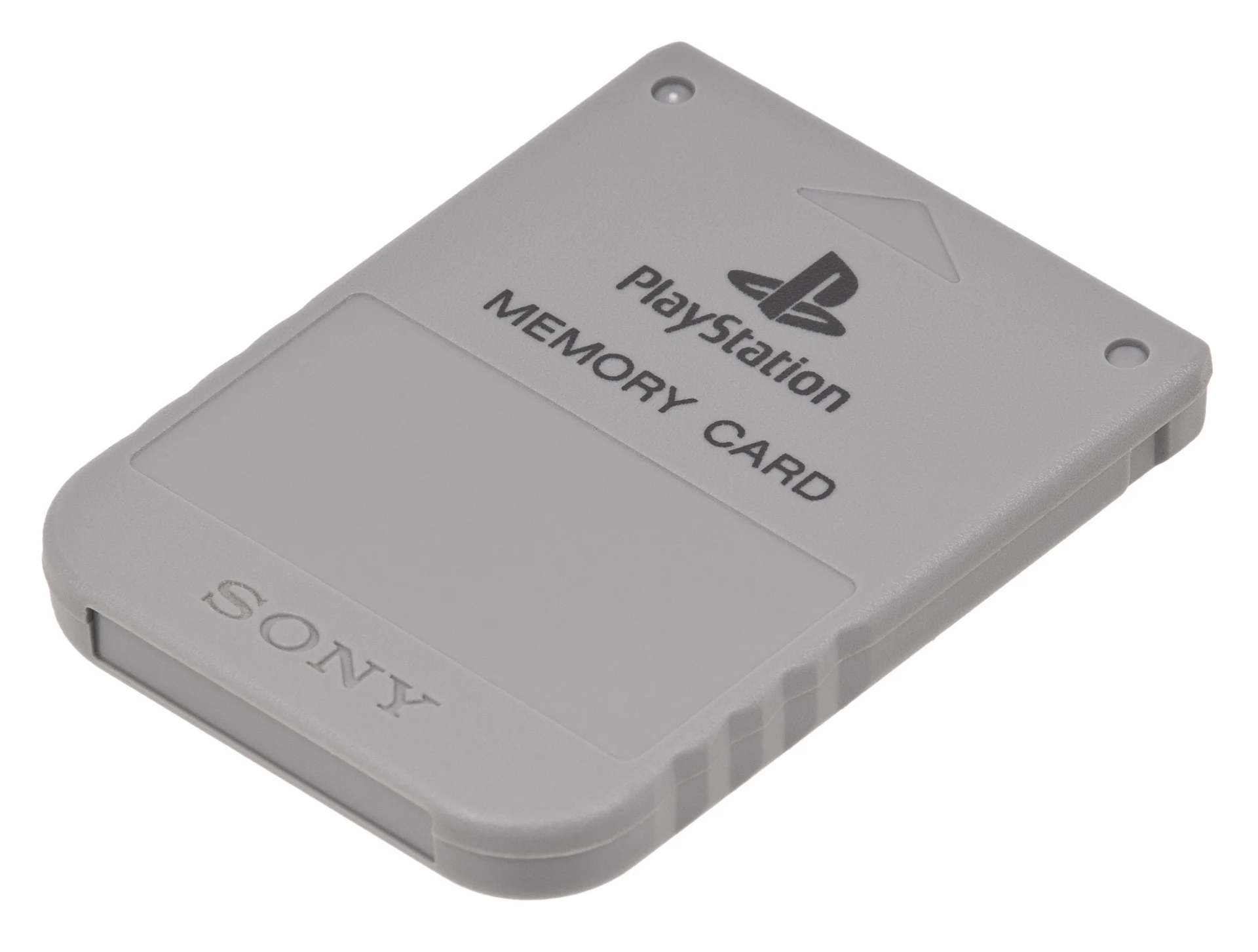
Progress was not invisible. It lived in a small removable object that could be carried to another house, filled up or lost.

The ritual was visible
Press the open button. Lift the lid. Take the disc by its edge. Catch the brief spectrum on its underside. Press it onto the centre. Close the lid until it clicks. Reach for the power button.
The movement was manual and understandable. The game did not simply appear because a licence had been verified somewhere else. You placed it into the machine yourself.
At the front of the console, the controller ports and memory-card slots made its relationships visible. One connection carried you into the game. The other held what you had done there. Progress became a small object that could be removed, borrowed, lost or carried to another house.
The physicality introduced friction. Cables tangled. Discs gathered scratches. Memory cards filled up. But it also produced rituals, and rituals turn technology into memory. People remember not only what a machine could do, but how they had to approach it.
The sound of a threshold
The startup sequence gave those actions ceremony.
Its opening did not rush. The screen stayed empty while the sound established depth. Then the image brightened and the harmony became stranger, as if the machine first acknowledged the room and then opened somewhere beyond it.
For a child sitting close to a cathode-ray television, the effect was physical. The white screen cast light across the carpet and the edges of furniture. The speakers seemed larger for a moment. Before the first game image appeared, the hardware had already created anticipation.
There was also relief inside the sound. A successful first screen meant the console had responded, but the disc still had to be read. A scratch or dirty lens could interrupt the journey. The startup became the first checkpoint in a small domestic process: the television was on, the machine had awakened and the world might open.
That combination of ceremony and uncertainty is difficult to reproduce in systems designed to disappear. Modern devices often remove the steps between wanting something and receiving it. Usually, that is an improvement. But when the steps vanish, the sounds, gestures and small negotiations around them can vanish too.
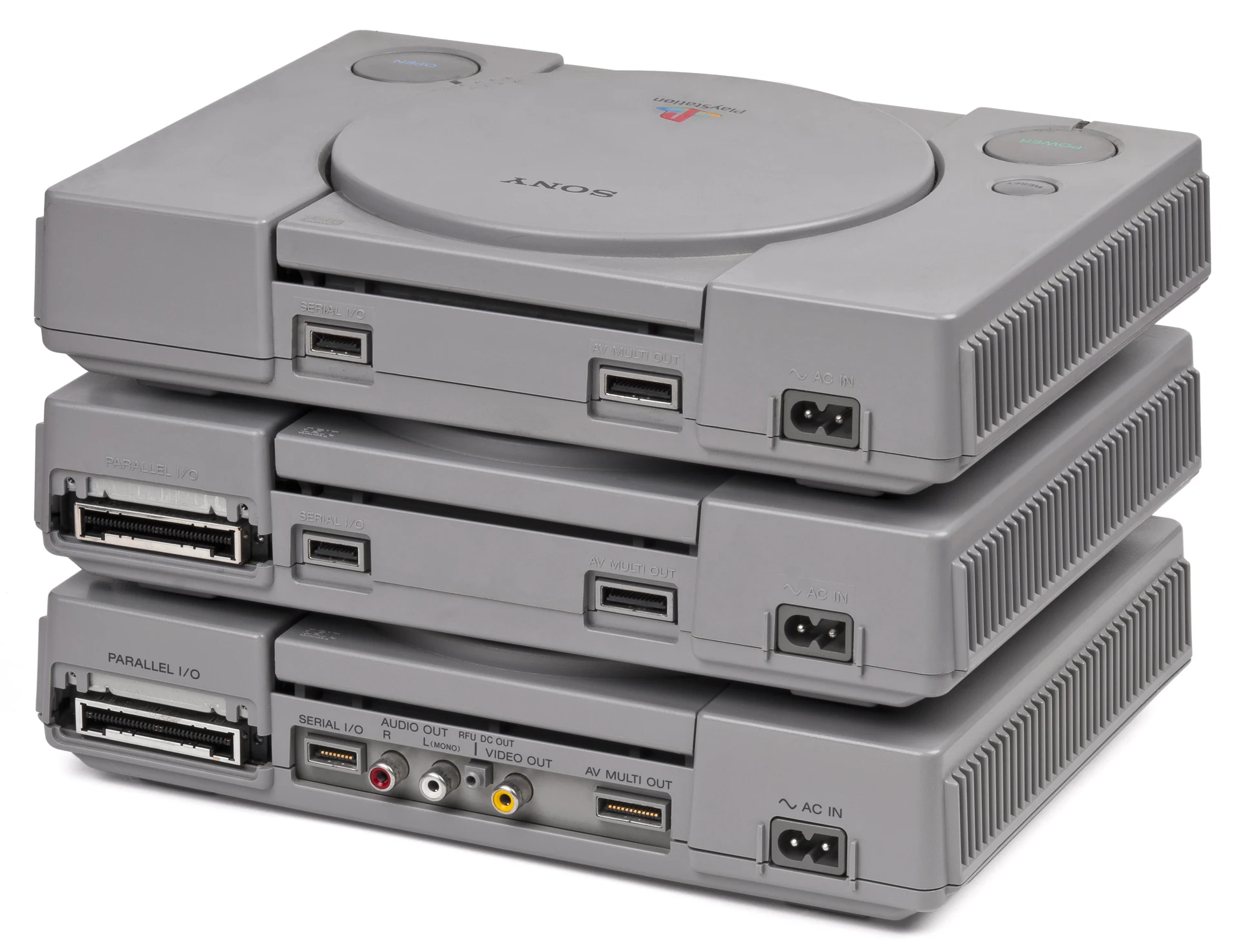
The machine was not one frozen object. Hardware revisions changed its rear-panel connections while the basic ritual in front of the television remained recognisable.

Why it still feels futuristic
The first PlayStation no longer looks like the future in a literal sense. Its plastic, cables, low-resolution graphics and spinning discs place it firmly in the 1990s. Yet that may be why it still carries the feeling so clearly.
Its future was not endless, invisible or permanently connected. It was contained. A game was a world with edges. A disc was a promise with a surface. A memory card held evidence that you had been somewhere. The machine waited beneath the television until you chose to wake it.
It also arrived at a cultural boundary. Games were becoming older, stranger and more cinematic. Three-dimensional spaces suggested possibilities that their rough geometry could not yet fully show. The gaps remained visible, and players helped fill them. Early 3D did not always look real because it was accurate. Sometimes it felt real because the imagination was still required to complete it.
That is what the original PlayStation offered at its best: not a finished future, but participation in one that was still being formed.
The room returns first
Years later, the startup sound can restore details that seemed unrelated to the machine itself. The glow of the television. The texture of the carpet. A game case beside a cereal bowl. A sibling waiting for a turn. The particular silence of a room after midnight.
This is how technology becomes an archive. The object stores more than its intended function. It gathers the rooms, people and expectations that surrounded it.
The first PlayStation felt like the future because it arrived before that future had become ordinary. It still required an entrance. You opened the lid, placed the disc, closed the machine and waited in the dark.
Then came the sound.
Watch the memory
See the room move.
The original Neon Memory Archive film connects the hardware, CRT light and emotional scale of the first PlayStation. The YouTube player loads only after you choose to play it.
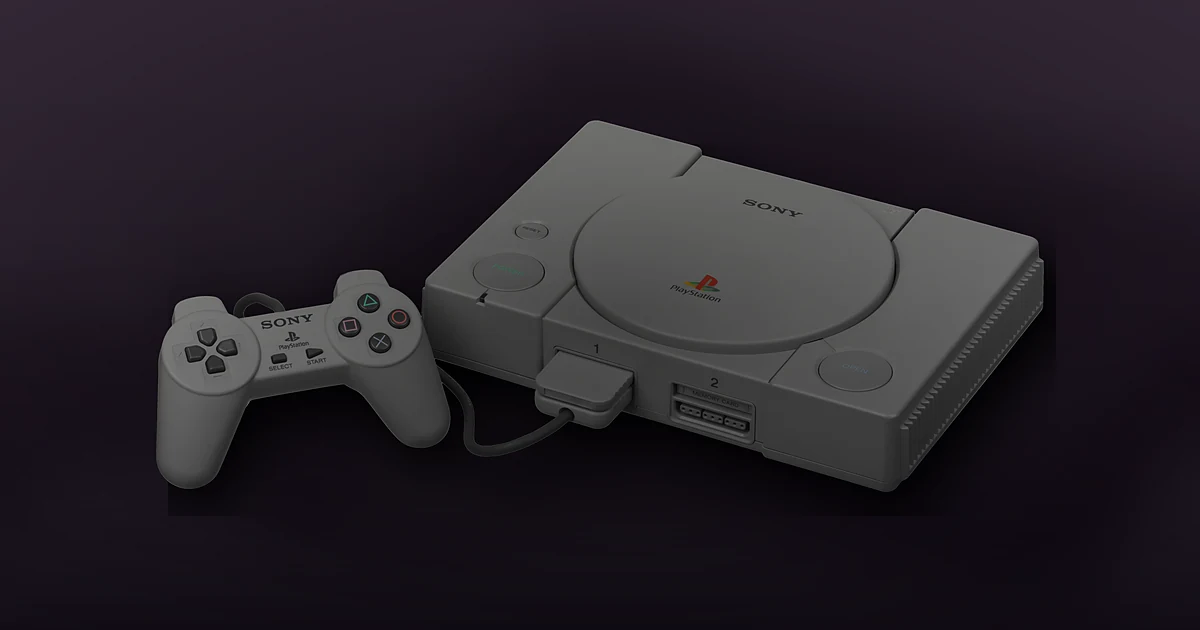
Why the First PlayStation Felt Like the Future
Original NMA film. Playback stays on YouTube; no third-party video is downloaded or rehosted.
Source and rights trail
The objects are real; the memory is interpretation.
The PlayStation controller, memory card and hardware-revision photographs are documentary object images from Evan-Amos and are used under their recorded public-domain or CC0 status. The wider essay is Neon Memory Archive editorial interpretation of the physical rituals around the platform. Trademarked names are used only for historical and editorial identification.
Keep exploring