
Story · 1985–2002
When Saturday Morning Cartoons Were an Appointment
Before every episode waited on demand, a whole week could point toward one bright, noisy stretch of television.
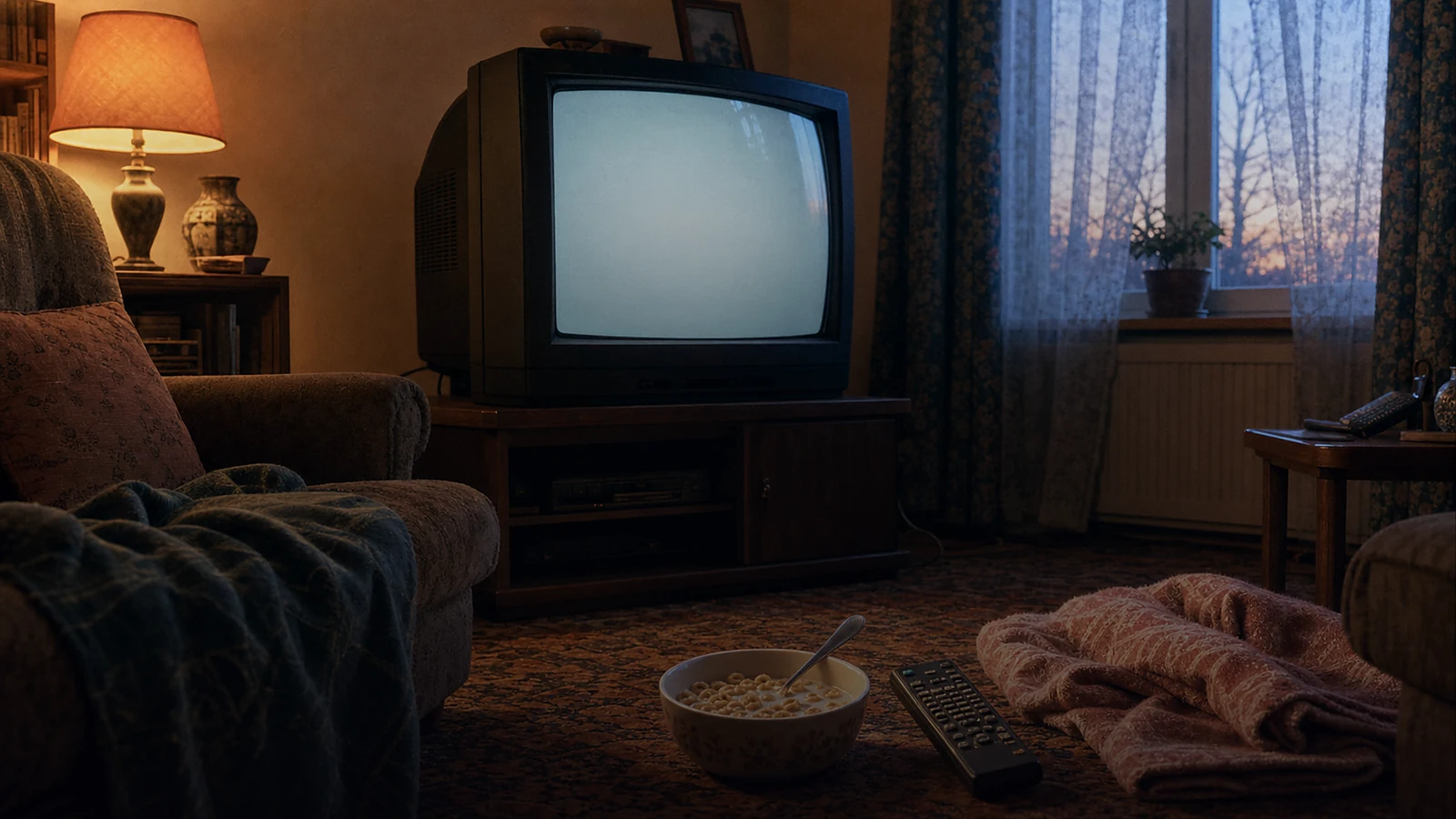
The house did not need to be awake yet. A television murmured at the far end of the room, its glass warming from black to grey, while the cereal softened faster than you meant it to. Saturday morning had a private opening ceremony: find the remote, keep the volume low, and arrive before the theme tune.
The schedule gave the morning a shape
Cartoons were not a library. They were a route. One show handed you to the next, and missing the opening minutes meant living with the gap until a repeat appeared weeks later. The printed listings in a newspaper or TV guide could become a small map of the weekend: circles around favourites, channel numbers remembered, breakfast timed around a particular start.
That scarcity was not always convenient, but it made attention feel communal. Children in different houses were watching the same episode at roughly the same moment. On Monday, the playground conversation began from a shared clock.
The room was part of the programme
A cathode-ray television contributed its own atmosphere. It clicked awake, gave off a faint electrical presence and threw cool colour across curtains that were still closed. You sat on carpet because the best place was often too close. The furniture, the weather outside and the sound of somebody making coffee in the kitchen all became inseparable from the broadcast.
This is why an old title sequence can recover more than a show. It can restore the weight of a blanket, the taste of a particular cereal and the exact angle of winter light across the floor.
Commercial breaks belonged to the memory too
The interruptions were loud, repetitive and astonishingly effective. Toy adverts, breakfast mascots, local cinema spots and trailers for next week formed a second programme between the programmes. They supplied playground catchphrases and Christmas-list intelligence. Even when we disliked them, they gave the morning punctuation.
A break also created movement. It was the moment to refill a bowl, call a sibling into the room or sprint to the bathroom while listening for the return sting.
You could not carry Saturday with you
When the final block ended, ordinary television resumed. The shift could be abrupt: children’s voices disappeared, the room grew quieter, and the day asked what you were going to do next. There was no endless autoplay to blur the boundary.
That ending made the ritual complete. Saturday cartoons occupied a protected pocket of time precisely because they could not follow us through the rest of the day.
What on-demand television cannot reproduce
Streaming has made animation easier to find, preserve and share. What it removed was the appointment: the little act of arranging yourself around something that would happen with or without you. Anticipation once sat beside enjoyment.
The programmes mattered, but so did the weekly return to the same room. Explore the related Memory Files on the family television and another archive memory, and the whole scene comes back into focus.
The memory survives in fragments
People rarely remember an entire broadcast morning in sequence. What survives is a set of cuts: the station ident, the cereal advert everyone quoted, the end credits shrinking while an announcer spoke over them. These fragments are powerful because they once arrived surrounded by ordinary life rather than presented as heritage.
To revisit them is not simply to prefer old television. It is to remember a weekly arrangement between a household, a broadcaster and a child who had managed to wake at exactly the right time.
Objects in this story
- CRT television
- printed TV guide
- cereal bowl
Loading related film
The archive is loading.
Continue through the archive