
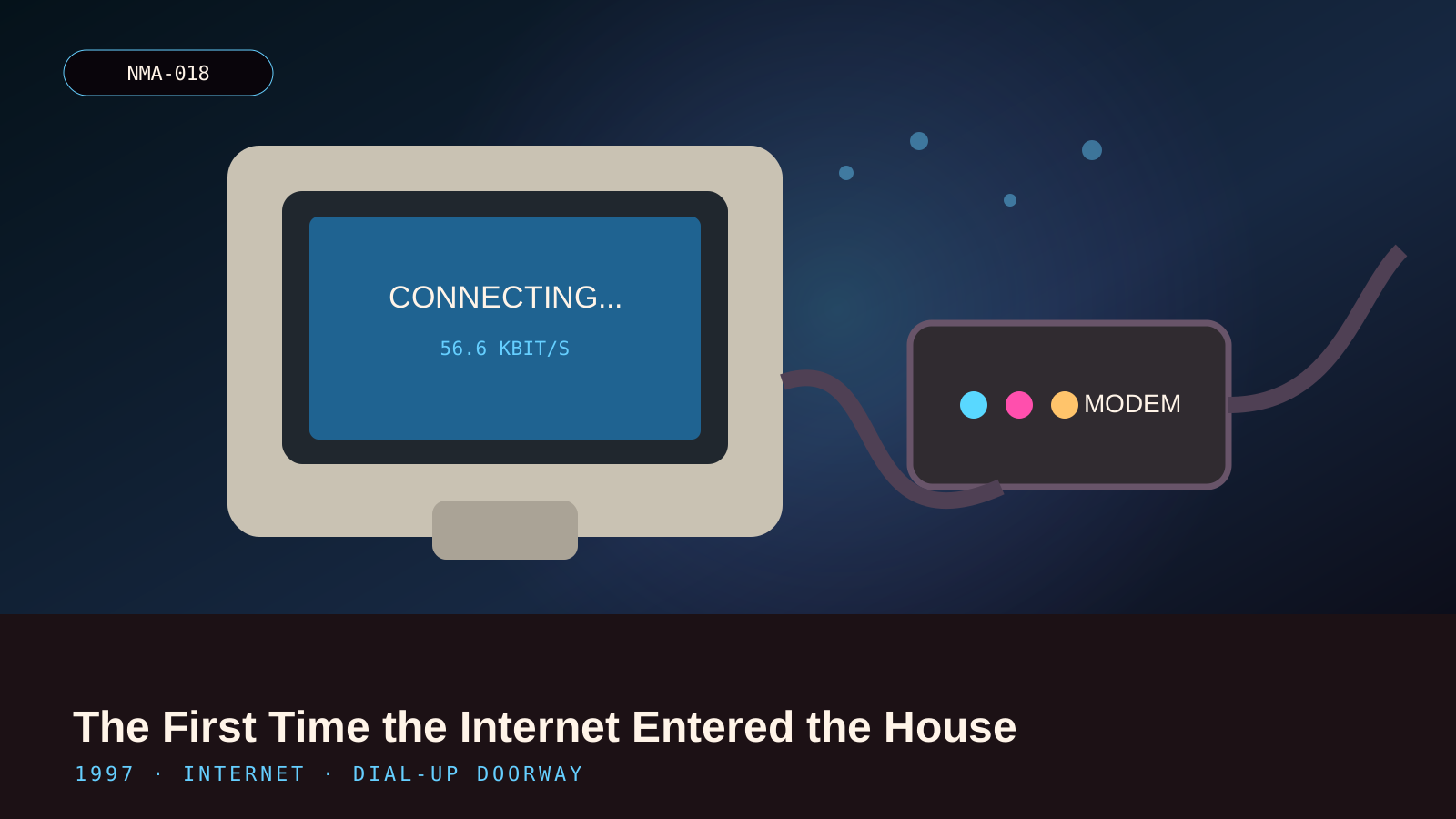
First came the click, then the dial tone, then a sequence of electronic cries that sounded like two machines negotiating in a language too fast for people. If the connection held, a small icon appeared and the family telephone line stopped belonging to the telephone.
Going online was a decision
The internet occupied a place and a time. It lived on the family computer, often in a hallway, spare room or corner of the living room. You sat down, connected and entered a session with a beginning. Someone might remind you not to stay too long because a call was expected.
That boundary made the online world feel like somewhere visited rather than a layer permanently resting over daily life.
The modem announced your departure
A dial-up handshake translated infrastructure into theatre. The tones changed as modems tested the line and agreed on a connection. Failure had its own sounds: silence, a busy signal, or the abrupt return of a disconnected state.
Because the whole house could hear the attempt, online time was rarely invisible. Technology made its demand on the family explicit.
Waiting changed how pages were seen
Images assembled from the top down. Downloads displayed an estimated time that could stretch dramatically. Opening several pages at once was a strategy, not a habit: give one page time while reading another. A carefully chosen MP3 might occupy the connection for an evening.
Slowness did not make every experience better, but it made progress legible. The web revealed itself piece by piece, which gave even ordinary pages a faint sense of arrival.
The early web felt handmade
Personal homepages, fan sites, message boards and web rings were uneven by nature. Background tiles clashed with text. Visitor counters mattered. Under-construction signs stayed up for years. The awkwardness made it obvious that individual people were building rooms inside the network.
Search was less complete, so discovery often came through links chosen by another person. Following them felt like moving through a neighbourhood of interests rather than querying a universal index.
Logging off returned the room
When the session ended, the phone line came back and the computer resumed being an object in the house. Conversations on MSN or a forum could remain unresolved until tomorrow. Presence was not assumed.
The early internet was exciting because connection was still an event. It expanded the room without fully dissolving it—and the sound of that expansion remains one of the era’s clearest memories.
Identity could be tried on slowly
A screen name, an avatar and a carefully revised profile offered room to experiment. Message boards gathered people around interests that might have had no local community. Because photographs and real names were not automatically expected everywhere, conversation often began with what somebody cared about rather than a complete public identity.
That anonymity had obvious risks, and the early web was never innocent. Yet for many users it also created a first experience of finding their people beyond school or town. The connection was technically narrow while the social horizon suddenly became enormous.
Bookmarks became a personal route back through that horizon. A short list of favourite sites could function like a shelf of places, each visited deliberately and checked for a new post, a changed graphic or another chapter of a fan-made guide.